


Thickness is one of the easiest specifications to get wrong. Too thin and a shelf sags or a shutter bows; too thick and you add weight, cost and hardware problems for no benefit. MDF and HDHMR are made in a wide range of thicknesses, and each band tends to suit a particular set of jobs.
Thickness bands and their usual jobs
| Band | Typical uses | Notes |
|---|---|---|
| Under 4 mm | Drawer bottoms, cabinet backs, flexible cladding, templates | Needs support; not for spans on its own |
| 5–8 mm | Wardrobe and cabinet backs, panelling skins, lining | Fix into grooves or onto a frame |
| 9–12 mm | Drawer sides, light shelves, decorative panels, CNC jali work | Edge screw holding is limited at this thickness |
| 16–18 mm | Carcasses, shutters, shelves, partitions | The workhorse range for furniture |
| 25 mm | Tabletops, thick shelves, heavy-duty or feature panels | Heavy; check hardware and wall fixing |
Thicknesses listed in the Ananta catalogue
Board thicknesses are often quoted with decimals because each manufacturer calibrates its own sizes. These are the options the Ananta catalogue lists for each Action TESA board:
| Board | Listed thicknesses | Exposure |
|---|---|---|
| Interior Grade MDF | 1.90, 3.30, 5.50, 7.00, 11, 16.50, 25 mm | Dry interiors |
| Exterior Grade MDF | 3.30, 5.50, 7.30, 11, 17, 25 mm | Covered, humid and semi-outdoor areas |
| HDHMR Board | 3, 5.50, 7.50, 11, 16.75, 18, 25 mm | Humid areas such as kitchens and vanities |
Shelves and spans
Fibre boards are generally more prone to sag than plywood over long, loaded spans. For bookshelves and pantry shelves, either keep spans short, add a centre support or a front lipping, or move up a thickness. A dense board such as HDHMR helps, but span still matters more than density.
Shutters and doors
Shutters are usually made in the 16–18 mm band so that standard concealed hinges seat properly. Very tall shutters may need a thicker board, a stiffening frame or anti-warp hardware. Thinner boards in the 9–12 mm range are often used for profiled or grooved inlays set into a frame rather than as a full shutter.
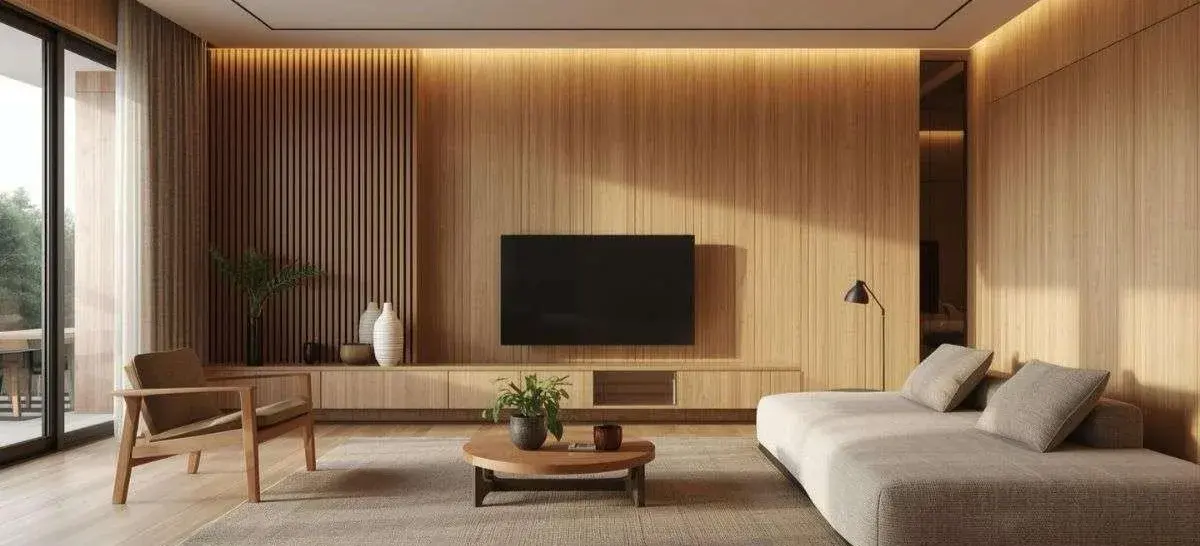
Wall panelling and CNC work
- Flat panelling skins: thin boards fixed to a frame keep weight down.
- Fluted or grooved panels: choose a thickness that leaves enough material below the deepest groove.
- CNC jali and cut-out screens: the 9–12 mm band is common; thicker boards for free-standing screens.
- Humid walls and bathrooms: use Exterior Grade MDF or HDHMR rather than interior grade.
Weight, hardware and fixings
Fibre boards are generally heavier than plywood of the same thickness, and the difference adds up on large shutters and wall-hung units. Check hinge capacity against shutter size and weight, and use more hinges on tall doors. Screws into MDF faces hold well with correct pilot holes, but edge fixing is weaker, especially in thinner boards; use dowels, connectors or a solid lipping where joints carry load. For wall-hung cabinets, fix through a rail into the wall rather than relying on screws into the board edge.
Ordering by thickness
- Group panels on your cutting list by board type and thickness.
- Convert each group into sheets with the Sheet Quantity Helper.
- Compare two boards’ published specifications in Board Comparison if you are deciding between grades.
- Send the list for a price and confirm thickness availability before production.
The MDF & HDHMR range lists each board with its thicknesses. For room-by-room suggestions, see wall panelling and wardrobes.
MDF boards in the Ananta catalogue
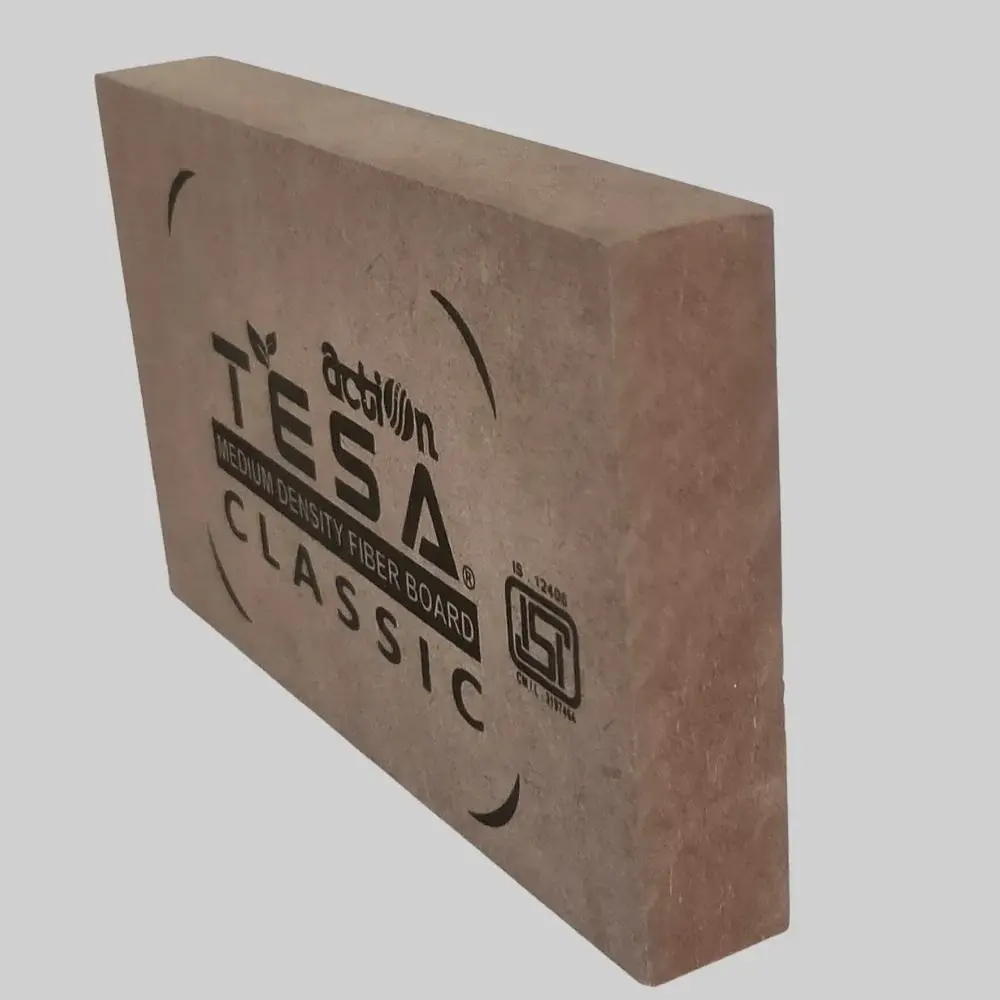
 MDF · Interior Grade
Action TESA Interior Grade MDF
- Key feature: Smooth, uniform surface
- Key feature: Homogeneous board
- Key feature: Easy to machine
For Furniture, Kitchen cabinets, Wardrobes
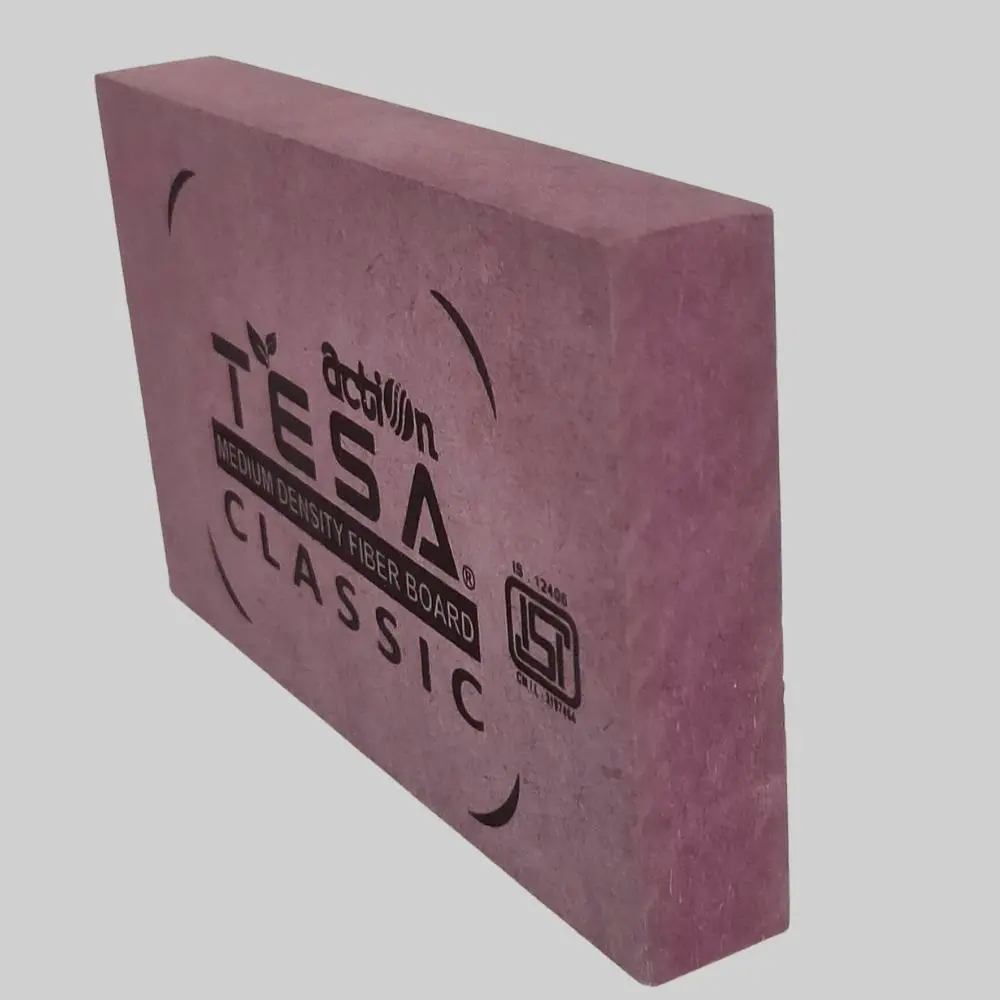 MDF · Exterior Grade
Action TESA Exterior Grade MDF
- Key feature: Moisture-resistant MDF
- Key feature: Smooth, workable surface
- Key feature: Homogeneous board
For Humid interiors, Covered, non-wet areas, Wall panelling
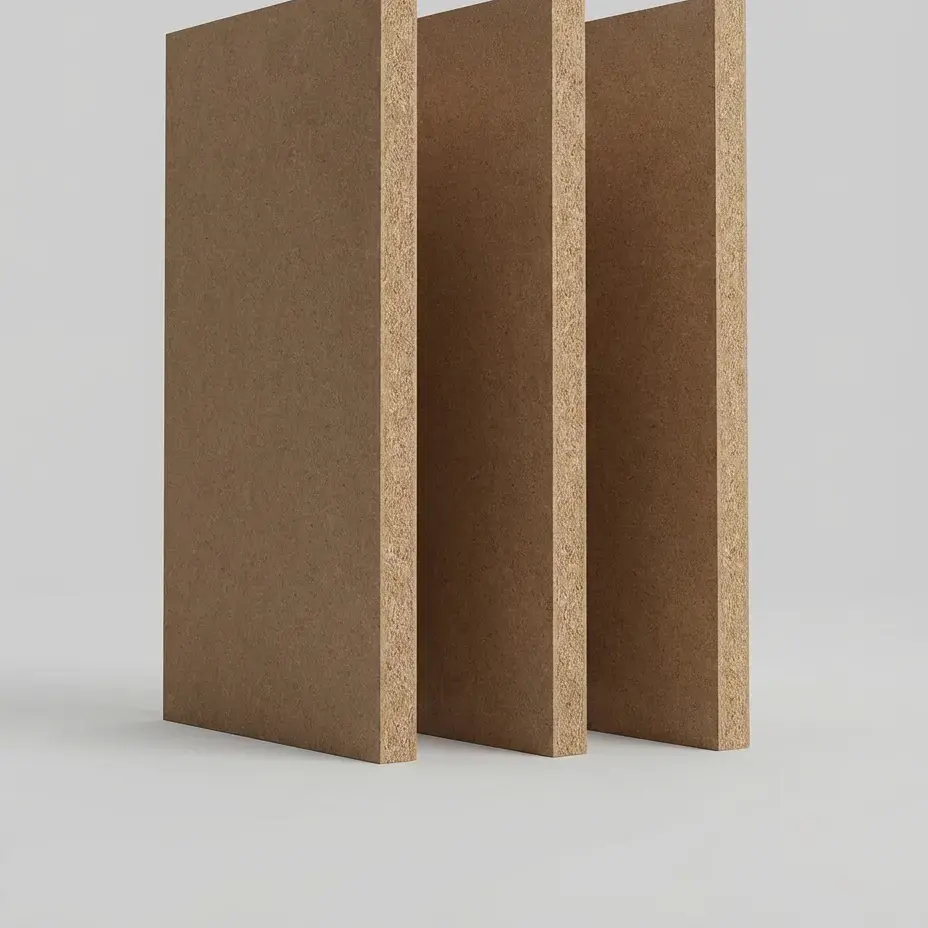 MDF · HDHMR
Action TESA HDHMR Board
- Key feature: High density core
- Key feature: High moisture resistance
- Key feature: Strong screw holding
For Modular kitchens, Wardrobes, Bathroom vanities