
Wardrobes look simple but ask a lot of their materials. Side panels carry shelves and hanging loads, shutters hang off hinges for years of daily use, and the finish is on show in the most-used room of the home. Choosing well means treating each part separately.
The parts and what each needs
| Part | What matters | Boards commonly used |
|---|---|---|
| Carcass (sides, top, bottom) | Stiffness, screw holding, flatness | MR plywood, HDHMR, HMR, prelam particle board |
| Shelves | Resistance to sag over the span | Match the carcass; thicker or supported for long spans |
| Shutters — laminated | Flatness, hinge holding | HDHMR, MR plywood, prelam particle board |
| Shutters — painted / PU | Smooth, grain-free face | Interior MDF, HDHMR |
| Back panel | Light, flat, closes the box | Thin MDF or thin plywood |
| Drawers | Edge screw holding, durability | MR plywood, HDHMR |
The carcass
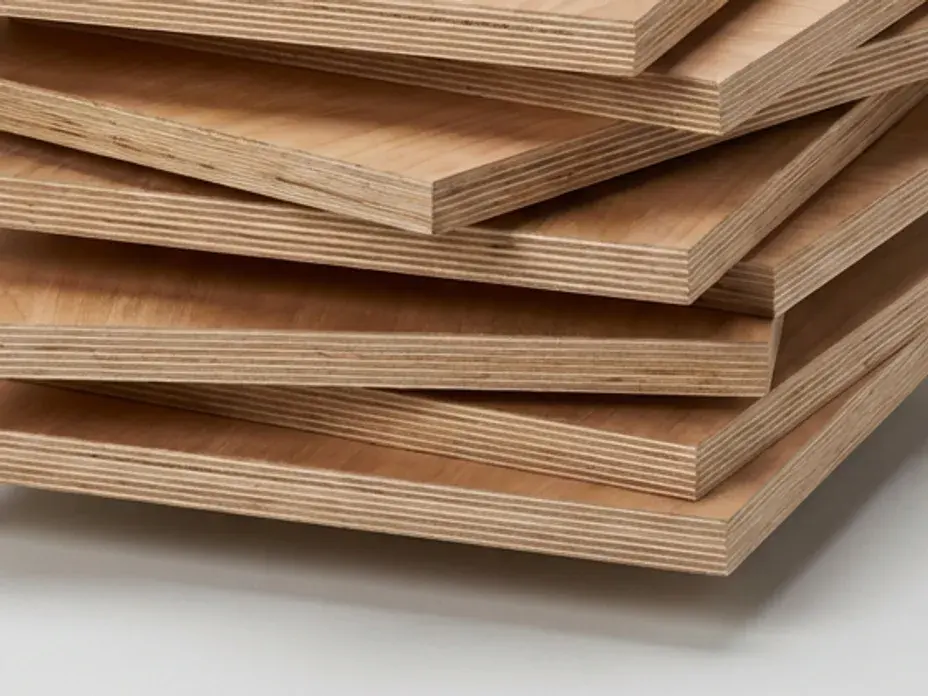
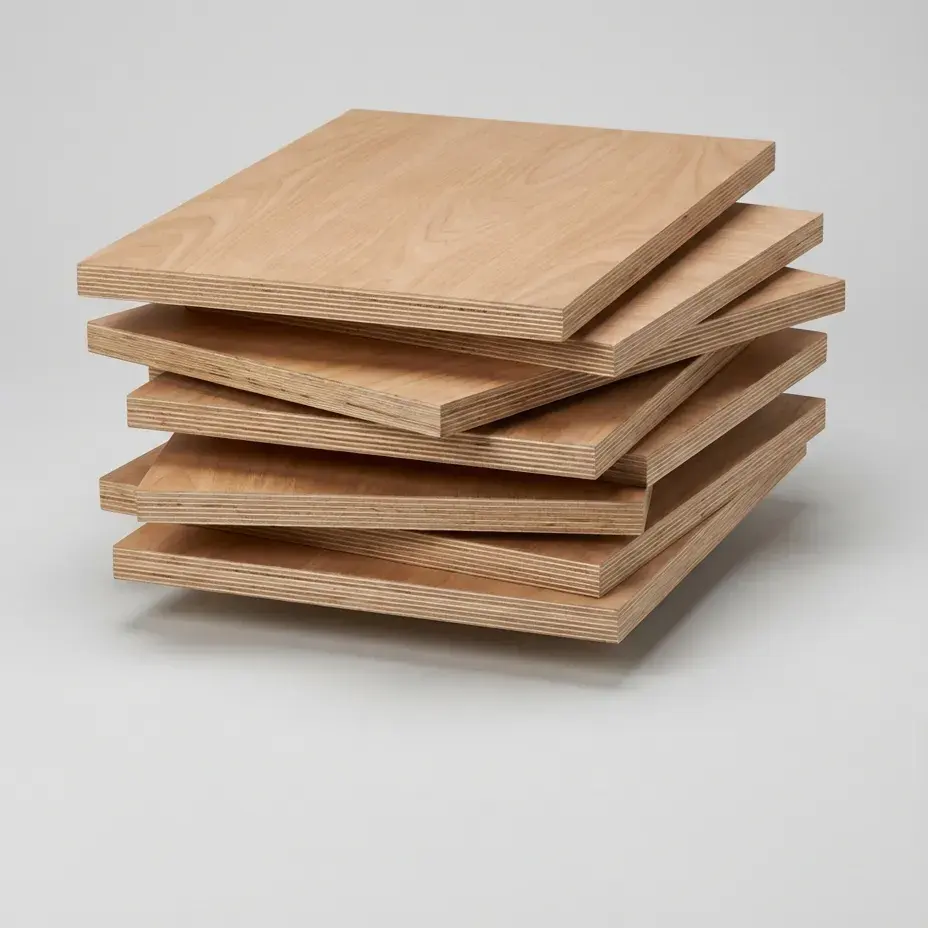
For site-built wardrobes, Duroply MR plywood is a common carcass choice: the catalogue lists it for furniture, wardrobes, bed frames and shelving in normal indoor conditions. Factory-made modular wardrobes often use engineered boards such as HDHMR or pre-laminated particle board, which machine consistently and arrive ready to assemble.
Shutters
Choose the finish first. If shutters will be laminated, a dense board that holds hinge screws firmly is the priority. If they will be painted or finished in PU, the smooth, homogeneous face of interior MDF is typically preferred. Tall sliding or hinged shutters should be checked for warp risk: balance both faces with the same finish where possible, and follow the hardware supplier’s guidance on shutter weight and size.
When pre-laminated board makes sense
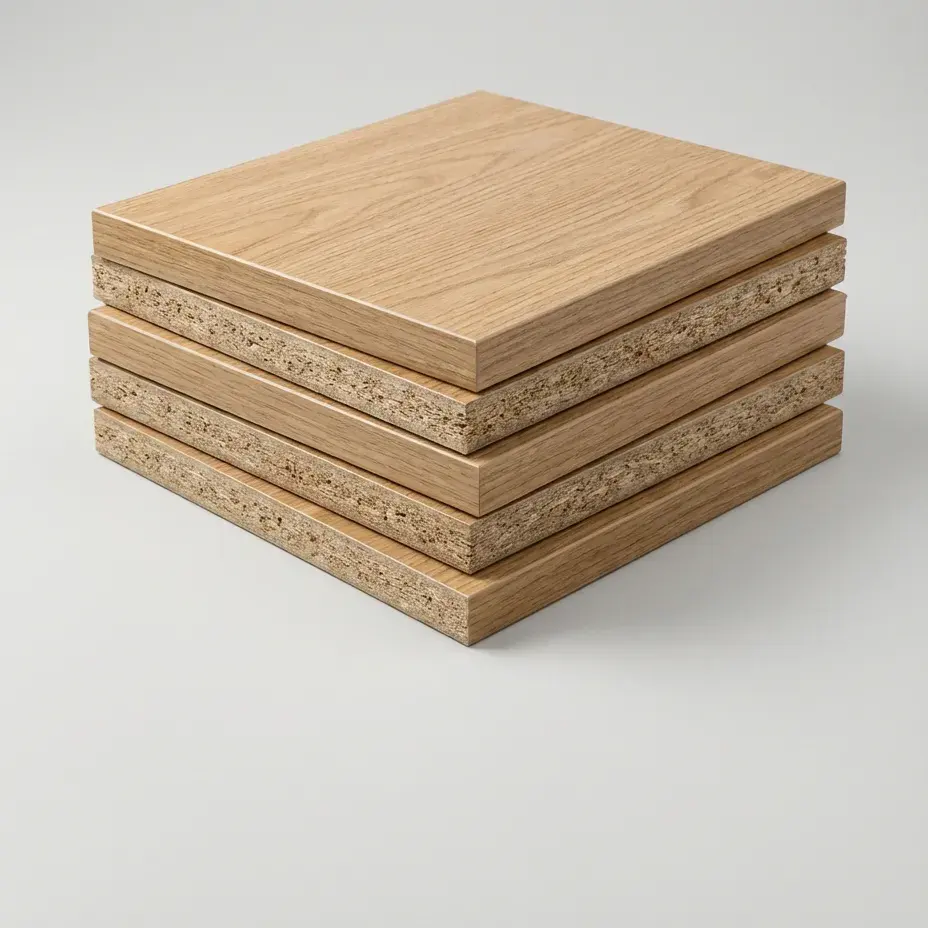
Pre-laminated particle board comes with a factory-applied melamine laminate on both sides, so it skips the separate lamination step. For modular wardrobes produced in volume, or wardrobe interiors where a clean, consistent finish matters more than custom detailing, it can save time and labour. The cut edges still need edge-banding in a matching colour.
Pairing interiors and exteriors
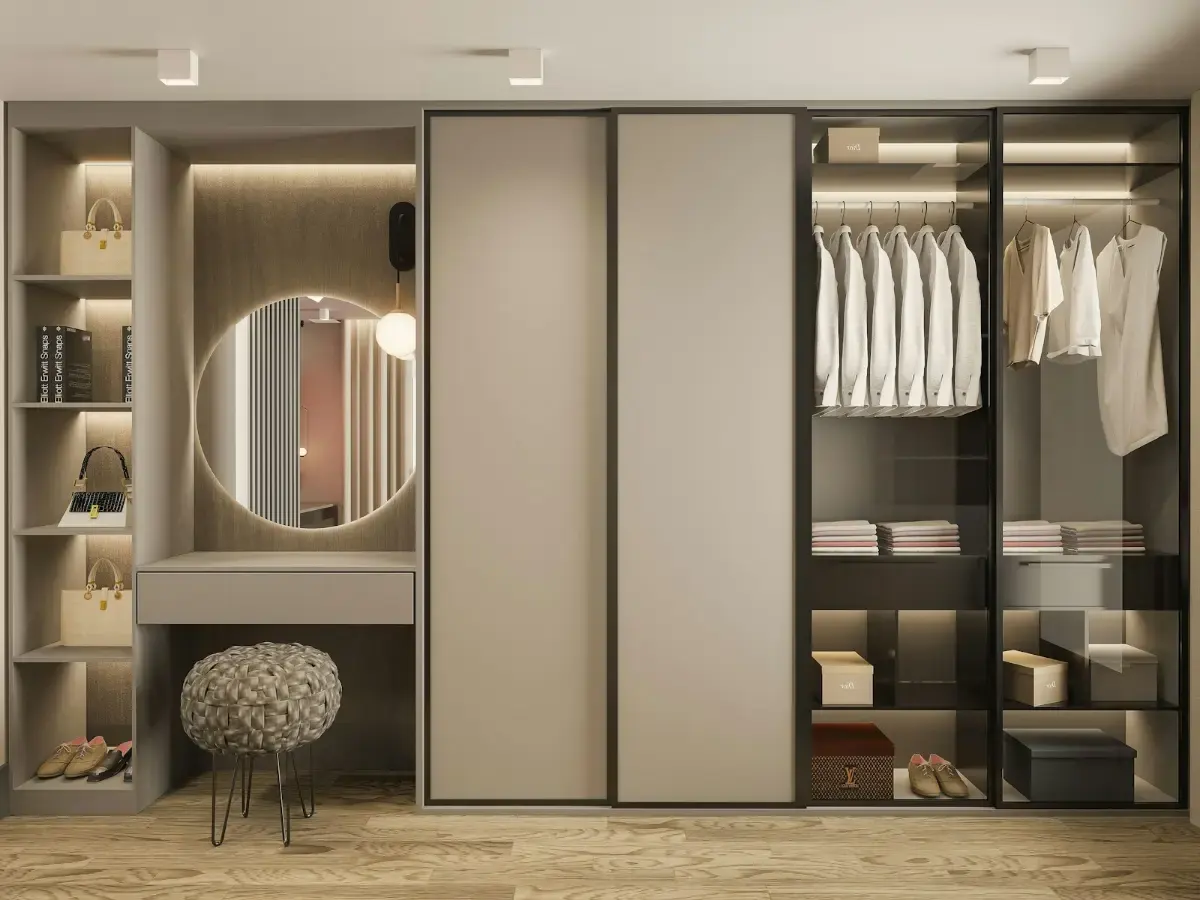
- Light interiors, feature exteriors: a white or light-grey interior makes clothes easy to see; the shutter carries the design statement.
- Wood-grain throughout: a single walnut or beech décor inside and out gives a furniture-like look.
- Painted shutters, laminated carcass: a common way to get a painted look while keeping the carcass durable and easy to clean.
Sliding or hinged shutters
Sliding shutters save floor space in smaller bedrooms but put more demand on flatness, because a large panel moving on a track shows any warp quickly. They are often made in a dense board or with an aluminium frame. Hinged shutters are simpler to build and adjust, and suit narrower bays. In both cases, the shutter material, its finish on both faces and the hardware should be chosen together rather than one after the other.
Specification checklist
- Note room conditions: any shared wet wall, AC duct or exterior wall?
- Choose carcass board and thickness (commonly 16–18 mm).
- Choose shutter finish, then the board that suits it.
- Check shelf spans and add supports or a thicker board for long, loaded shelves.
- Specify edge-banding colour and thickness for every visible edge.
- Confirm hinge and channel hardware against shutter size and weight.
The wardrobe materials page sums up the options, and the prelam board and plywood ranges list the boards and their sizes.
Wardrobe boards in the Ananta catalogue
 Plywood · Moisture Resistant (MR)
Duroply MR Moisture Resistant Plywood
- Key feature: IS 303 MR grade
- Key feature: 3-hour hot-water test
- Key feature: Termite & borer treated
For Furniture, Wardrobes, Bed frames
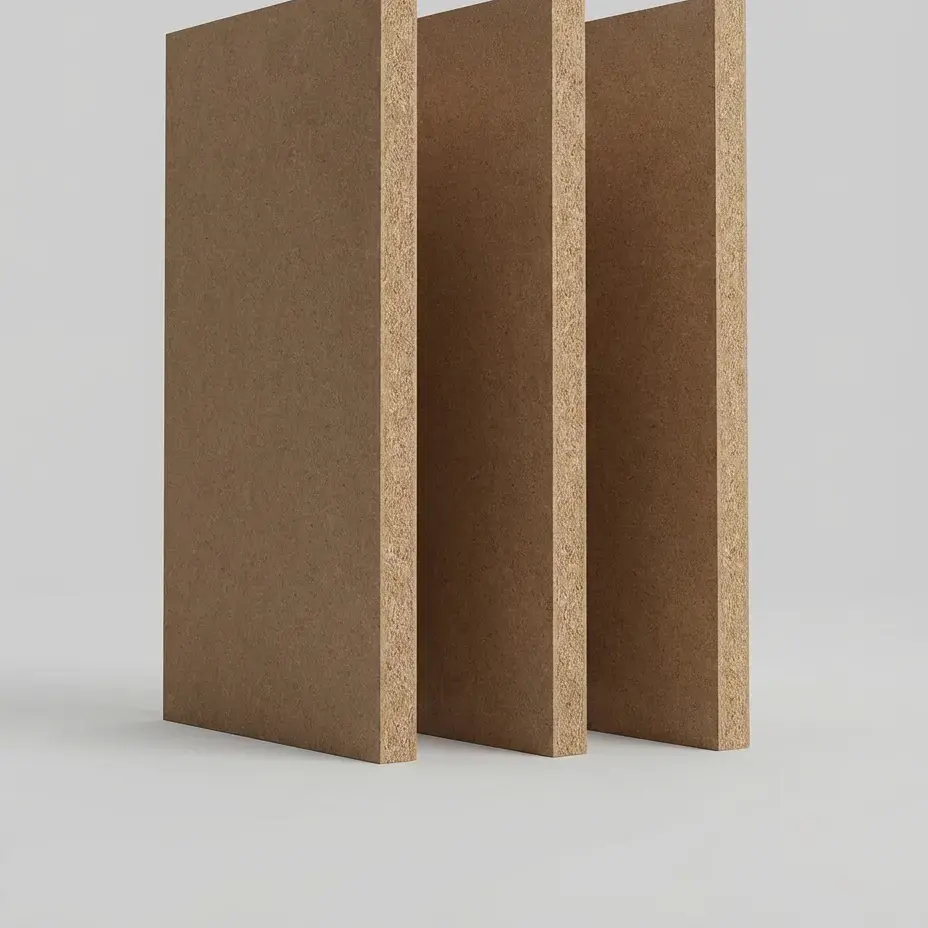
 MDF · HDHMR
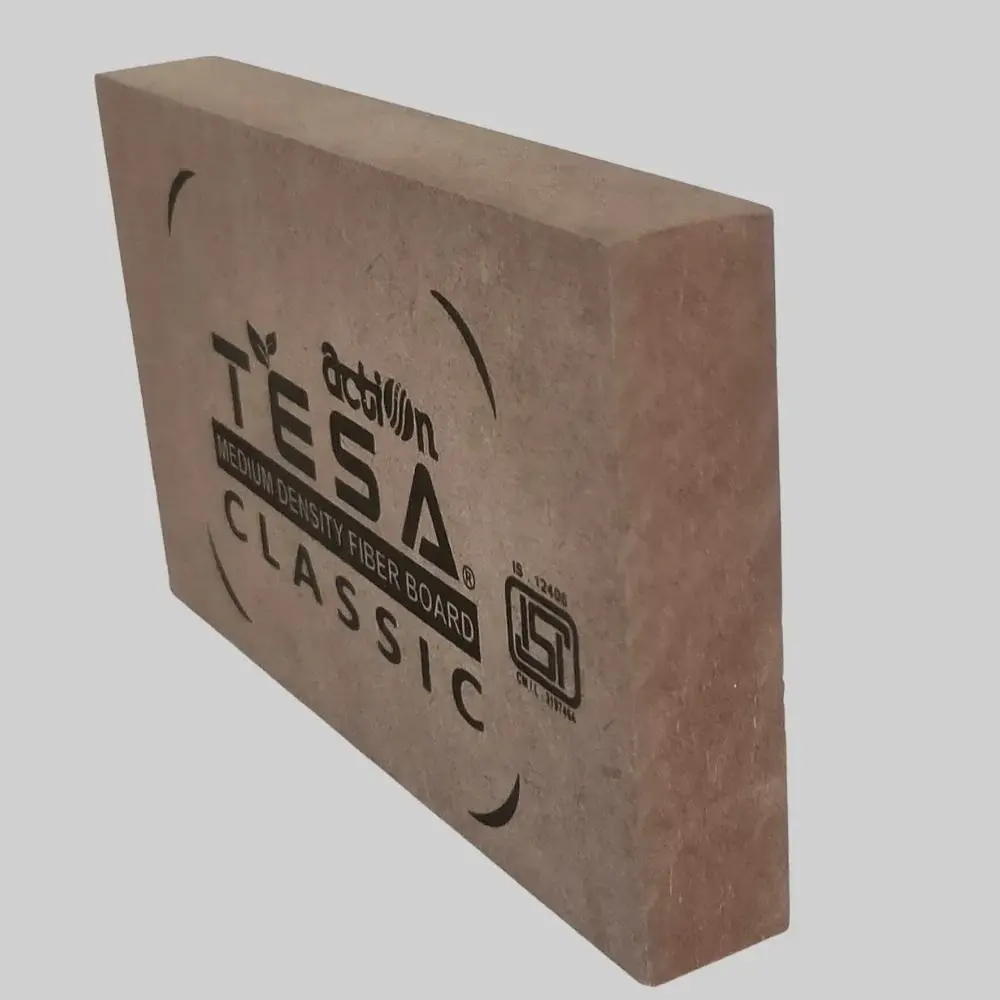
Action TESA HDHMR Board
- Key feature: High density core
- Key feature: High moisture resistance
- Key feature: Strong screw holding
For Modular kitchens, Wardrobes, Bathroom vanities
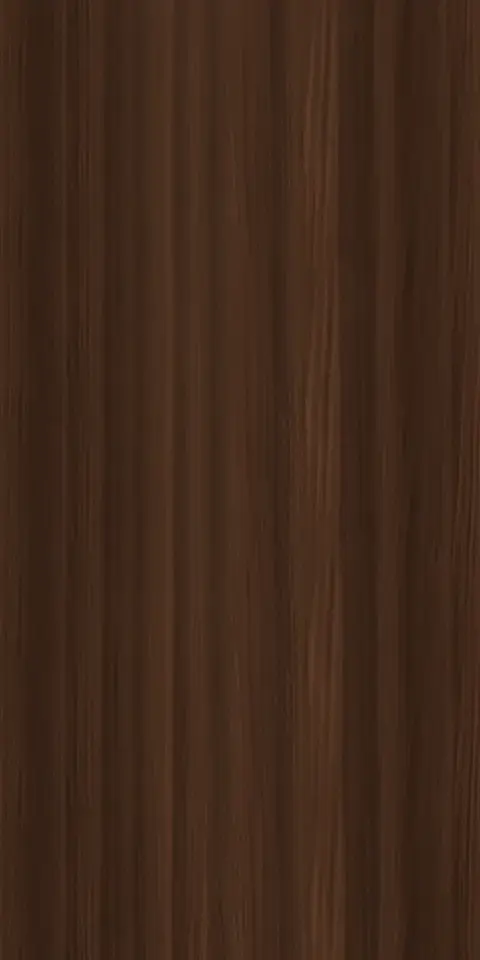 3009Prelam Boards
Action TESA Prelam Particle Board 3009 – Classic Planked Walnut
- Key feature: Ready decorative finish
- Key feature: No separate lamination
- Key feature: Scratch & wear resistant
For Wardrobes, TV units, Executive office furniture
 1104Prelam Boards
Action TESA Prelam Particle Board 1104 – Silver Grey
- Key feature: Ready decorative finish
- Key feature: No separate lamination
- Key feature: Scratch & wear resistant
For Office interiors, Wardrobes, Commercial furniture